



The most important systemic risk to financial stability in Romania moving forward is the rise in global uncertainty and fast deterioration of investor sentiment towards emerging economies, according to the June 2020 Financial Stability Report released by the National Bank of Romania (BNR) on Monday.
"Current assessments signal two severe risks to financial stability in Romania: a rise in global uncertainty and fast deterioration of investor sentiment towards emerging economies, and the worsening of domestic macroeconomic equilibria, also in terms of the structure and financing cost of the budget deficit. There is a third factor with an impact on financial stability that stands at a high level: the risk of an uncertain and unpredictable legislative framework in the financial and banking sector. Two other risks are moderate and refer to: the default risk for loans to the private sector, and access to finance of the real economy," reads the report.
BNR also says that since the previous Financial Stability Report, systemic risks to financial stability in Romania have increased substantially, similarly to developments in Europe and around the world. The outbreak of the COVID-19 pandemic has had serious negative economic, social and financial consequences, prompting national and international authorities to take swift measures. The mix of actions has ranged from monetary to prudential and fiscal solutions.
The COVID-19 pandemic took a heavy toll on all sectors of economic activity and triggered a significant rise in uncertainty and a fast adjustment of risk premia on financial markets, with the containment measures leading to bottlenecks in supply chains and a sharp contraction in demand, whereas financial markets faced marked increases in volatility and notable asset price adjustments. The pandemic crisis may also be an opportunity for implementing structural measures to place Romania into a novel paradigm of more sustainable, innovative and resilient economic growth.
According to BNR, the most important systemic risk to financial stability in Romania moving forward is the rise in global uncertainty and fast deterioration of investor sentiment towards emerging economies.
The second severe systemic risk refers to the worsening of domestic macroeconomic equilibria, also in terms of the structure and financing cost of the budget deficit. Economic activity is expected to post a significant downturn this year, following the COVID-19 pandemic effects on both demand and supply, according to the report.
Forecasts by European and international institutions show a contraction in Romania's economy by up to 6 percent in 2020, before GDP dynamics returning to positive territory in 2021.
BNR calls increasing global uncertainty, rapidly declining investor confidence risk to financial stability
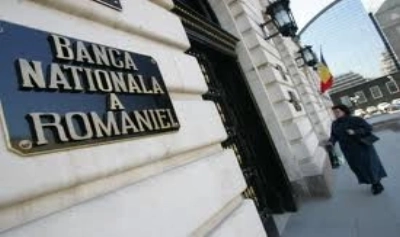
Sursă foto: stiripesurse.ro
Distribuie articolul


Distribuie articolul


București 12°C
12°C
12°CArticole Similare

10
Csoma Botond: UDMR position - clear, we want political stability, we do not need political crisis as well
10

8
Emanuel Parvu, among eight filmmakers selected to present their next film project at Investors Circle
8
12
Cold spell, mixed precipitation, strong wind to grip most of Romania through Friday morning
12

10
Turnover in retail trade down 7.6pct in first two months of 2026
10

8
Seante Chair Abrudean: A nation is strong when everyone has a chance to build their own path
8

26
Romania's Ruse to play Yastremska in Linz Open R16
26

17
"B.P. Hasdeu" National College of Buzau represented to FIRST Tech Challenge World Championship in Houston
17

36
RO-ALERT message in north Tulcea County as 17 drones detected in border area
36

30
Romania's Cirstea reaches Linz Open doubles QFs
30

13
Romanian duo Jecan-Pavel reaches Madrid Challenger QFs
13

31
Lucescu was not only coach, but also ambassador of friendship between Turkey and Romania
31

14
Important part of who I have become is due to Mircea Lucescu (Gheorghe Hagi)
14

14
Mircea Lucescu - a mentor for entire generations and a symbol of excellence (Senate's speaker)
14














Comentează