



The death of Ion Iliescu definitively closes an essential and deeply controversial chapter in Romania's recent history: the post-communist transition, says political analyst Cristian Pirvulescu, emphasizing that the questions raised by Iliescu's presence in our contemporaneity remain more relevant than ever.
"A former communist leader converted into a guarantor of a controlled transition to a hybrid regime, Iliescu was the man at the center of power at the time of the fall of the Ceausescu regime and remained a dominant figure in Romanian politics for a decade and a half," Pirvulescu told AGERPRES on Tuesday.
According to the political pundit, Iliescu is seen differently by various segments of the population.
"For some, Ion Iliescu was the 'Savior' who ensured a peaceful transition to democracy in a period when chaos, violence and the dissolution of the state seemed real risks. For others, Iliescu remains the symbol of a hijacked revolution, of the miners' rampages, of the restoration of the old political police and communist elites in a 'democratic' form and of the long-drawn delay of the profound reforms that could have repositioned Romania much earlier on the Western path," stressed Pirvulescu.
He showed that the public personality of Romania's first post-Revolution president was always divided between the image of a rational, calm, almost passionless politician, and the reality of decisions that produced social traumas and consolidated a cronyism-based power system.
"Ion Iliescu's legacy is not simple: he was a man of compromises, of unstable balances, of a 'rule of law' in which justice was often suspended. And the lack of a clear and definitive trial for the crimes of the Revolution and the Miners' Rampages remains as a heavy stain on his historical biography," the analyst argues.
According to Pirvulescu, with Ion Iliescu's death, "the founding era of post-communist Romania closes not only symbolically, but historically too".
"Iliescu's time - and that of the illusions centered on an 'original democracy' - has ended. From now on, what remains are the archives, the documents, the historians and - above all - the responsibility of the generations who must judge the facts, not the myths. Ion Iliescu is no more, but the questions raised by his presence in our recent history remain more topical than ever," the analyst concluded.
Former President Ion Iliescu died on Tuesday at the age of 95. He had been hospitalized since early June at the 'Prof. Dr. Agrippa Ionescu' Emergency Clinical Hospital, having been diagnosed with lung cancer.
Political analyst Pirvulescu:Ion Iliescu's death definitively closes a deeply controversial chapter in Romania's recent history
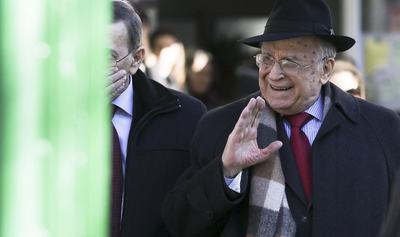
Sursă foto: Inquam Photos/ Octav Ganea
Distribuie articolul


Distribuie articolul


București 23°C
23°C
23°CArticole Similare
8
Cardinal Claudiu: Prayer must rise for Ukraine, Middle East; light cannot be overcome by darkness
8

8
Easter food is getting more expensive: cocoa powder and chocolate, biggest price increases; radishes,only ones cheaper(statistics)
8
11
Academy President calls for return to values, virtues, as country will move forward through them
11

11
Minister of Energy: Petromidia Refinery is operating at maximum capacity
11

18
Negrescu: Metrorex wants to increase price of trip from 5 to 7 lei; unprecedented price increase in passenger transport
18

10
Anonimul Film Festival opens submissions for short, feature competitions; May 20 deadline
10
18
Bucharest Sector 4 mayor, US Special Envoy for Global Partnerships discuss investments for Capital development
18

31
France's Macron expected in Romania in early May (sources)
31
11
Competition watchdog to make sure companies not artificially increasing prices
11
15
Sighetu Marmatiei ring road to be built on 40-million-euro investment
15

13
Strong winds to grip most of Romania throughout Tuesday
13
10
Romanian Red Cross to organise Health Marathon diabetes prevention campaign
10

20
Only 20pct of Romanians shop above average for Easter
20









Comentează