





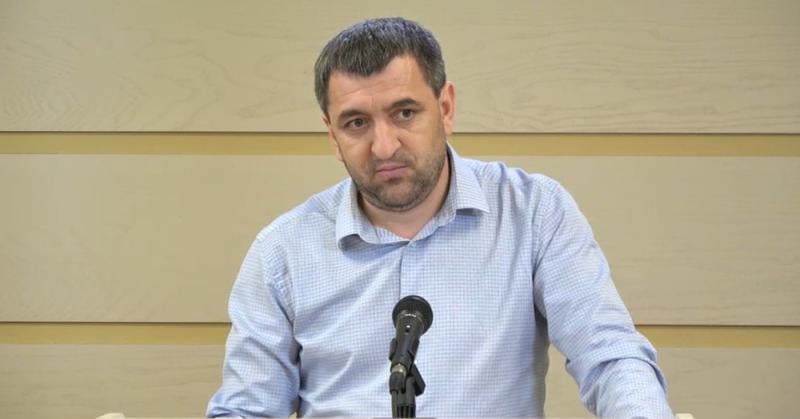
Ukraine's survival within borders close to its original ones is essential for Romania, political scientist Lucian Dirdala warns, highlighting the strategic, economic and political implications of the bilateral relationship in a region undergoing profound transformation.
In his view, the central stake for Bucharest is to prevent Russia from gaining control over the mouths of the Danube, which would radically alter the security balance in the Black Sea. From this perspective, the existence of a functional Ukrainian state oriented towards Western values is essential both for Romania and for the European Union, Dirdala argues, agerpres reports.
"I believe that the survival of a sovereign Ukraine is very important for Romania, and by that I mean survival within borders close to the original ones. Setting aside strictly strategic considerations - which are for specialists to address - I think we certainly do not want geographical proximity to Russia, nor a neighbourhood with a Moscow satellite state such as Belarus. We also want to avoid increased Russian pressure on the mouths of the Danube. We cannot speculate at this stage about the territorial component of a potential armistice; I think lost territories will not be easily recovered. But a Ukraine oriented towards the West, preferably a member of the European Union, is what I believe we all want," Lucian Dirdala, lecturer at Alexandru Ioan Cuza University of Iasi, told AGERPRES.
In his opinion, regardless of how the war ends, Ukraine will remain a large state and a key neighbour for Romania, and the bilateral relationship will have to evolve beyond a strictly security-based dimension.
"Ukraine is becoming an extremely important neighbour for Romania - it is a large state and will, in all likelihood, orient itself towards democratic values,' the political scientist said.
As for post-conflict relations, he noted that they will 'probably not be without tense moments, as has happened in past decades, for example in the maritime delimitation dispute settled by the International Court of Justice in the Snake Island case'.

"We should not idealise Ukraine's performance, nor Romania's for that matter. But it is the neighbour with whom we will have to build productive economic relations, friendly society-to-society interactions and a certain degree of political convergence, if possible, once the war is over. There is a positive horizon from this point of view," Lucian Dirdala added.
From his perspective, one of the most sensitive issues remains that of the Romanian minority in Ukraine, including those who identify as Moldovans in southern Bessarabia.
In this regard, Lucian Dirdala argues that Romania seeks firm guarantees for identity, linguistic and educational rights. However, the way Kyiv manages this matter will be shaped by its own concerns regarding the Russian minority and by the broader process of consolidating Ukrainian national identity.
"The question is how Ukraine will be able to differentiate between the Russian minority - whose influence it seeks to reduce - and the Romanian, Hungarian, Slovak and Polish minorities, in order to preserve its cohesion. In Ukraine, there is a nation-building process taking place alongside the process of state-building. Minorities are therefore highly sensitive issues for any country in such a situation. The Romanian minority in Ukraine - and I include here those in southern Bessarabia - has been loyal to the Ukrainian state. The religious aspect, however, is extremely complex," Lucian Dirdala said.
As for Ukraine's reconstruction, the analyst struck a cautious note, pointing out that it is not yet clear who will coordinate the post-war political and financial architecture, nor what precise roles the United States and the European Union will play.
"If we are talking about reconstruction funds, we will clearly have to see what the post-war political architecture looks like, because one can imagine, for example, that key decisions might primarily be made in Washington. That is also a possibility. In any case, Europe will be called upon to contribute funding, and Romania, as a member of the European Union, will have to fulfil this responsibility. If developments move in a positive direction, creating a virtuous circle in which Ukraine's reconstruction involves infrastructure rebuilding, I believe there are Romanian companies capable of taking part in fair competition, either independently or as part of consortia. Likewise, when it comes to rebuilding the industrial base, I think there are Romanian firms that could become involved in such projects," says the analyst.
Lucian Dirdala notes, however, that any future accession of Ukraine to the European Union would significantly alter the internal balance of the bloc.
"As a populous country, Ukraine would rank among the EU's larger member states and become a major beneficiary of European funds, from the Common Agricultural Policy to regional and infrastructure financing. This raises legitimate questions about budgetary sustainability and competition for resources within an enlarged Union," he said.
In his view, the budgetary generosity that characterised previous enlargement rounds is unlikely to continue, particularly given mounting pressure to increase defence spending.
"Ukraine would undoubtedly be a beneficiary. But the Union, which has already begun trimming agricultural allocations, is likely to exercise greater caution in other spending areas as well, in order to avoid further strain on the EU budget. There are many member states and numerous economic and social groups that rely on European funding - and each will defend its interests vigorously," Dirdala explained.
Politically, he argues, an EU-member Ukraine would adopt a firm stance towards Russia and push for a stronger common foreign and security policy - especially since NATO membership does not appear likely in the foreseeable future.
"The current rhetoric of Kyiv's leaders, including President Volodymyr Zelensky, suggests that Ukraine would seek to play a vocal and influential role within the EU," the political scientist observed.
Against this backdrop, Dirdala believes Romania will need to assert its interests more actively at European level.
"Assuming Ukraine's accession is not excessively delayed, Romania will have to take a more proactive approach in promoting its interests within the EU and prepare for tougher budgetary competition. In any case, European funding is likely to diminish in the future, meaning Romania will need to make do with its own resources while staying within EU parameters, particularly if it aims to adopt the single currency. At the same time, Romania should position itself among the advocates of stronger common security policies - which will be crucial for Ukraine as long as it remains outside NATO," Lucian Dirdala concluded.












Comentează