



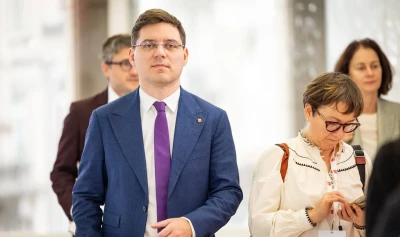


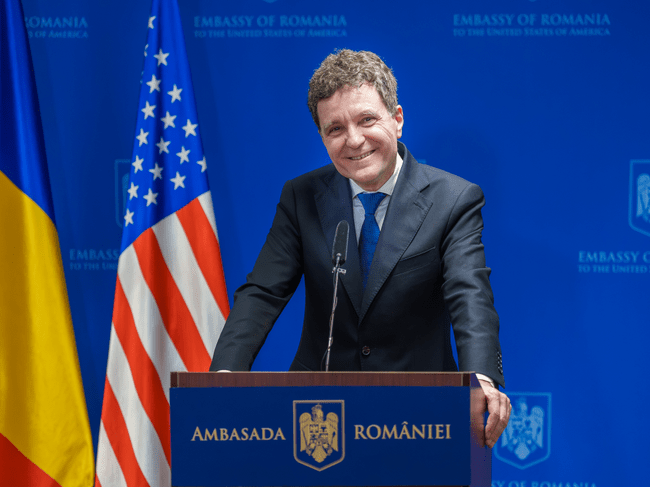
Four years after the onset of the Russian aggression against Ukraine, it is obvious that the conflict has profoundly changed the European Union, and to Romania the effects have been even more direct, given the geographical proximity to the conflict zone and the strategic importance of the Black Sea, with the country becoming a front-line state on the eastern flank with increased responsibilities in terms of security and infrastructure criticism, MEP Victor Negrescu (S&D group) told AGERPRES on Tuesday, on the day that marks four years since the launch of the Russian aggression against Ukraine.
"While before we talked about security in rather theoretical terms, today we are talking about a concrete reality: the war has returned to the borders of Europe, and stability can no longer be considered guaranteed. To the European Union, the impact has been multiple. First of all, at the level of security and defence, the member states had to rethink their priorities, increase investments in defence and strengthen cooperation with NATO. Secondly, from an economic and energy point of view, the break from dependence on Russian energy has generated costs, inflation and social pressures, even if this diversification is beneficial and necessary. Thirdly, the conflict has put European unity to the test, testing the ability of member states to remain united in the face of obvious aggression," Negrescu said.
According to him, Romania has managed important refugee flows, facilitated the transit of Ukrainian grain and has suffered economic effects in agriculture, energy and transport.
"Many of these efforts have left deep traces. That is why we have taken steps for the rapid opening of the European Maritime Security Hub in our country at the Black Sea. At the same time, Romania is a constant target of information war and destabilisation attempts. All this shows that the war in Ukraine, even if we don't want it, is not a distant conflict, but one that affects us directly and structurally," the Social Democrat MEP said in his statement to AGERPRES.
He also mentioned the EU sanctions against Moscow. In his opinion, these sanctions were not designed as a momentary solution to stop the war, but as an instrument of economic and political pressure in the medium and long term, limiting the Russian Federation's access to technology, financing and Western markets and increasing the costs of maintaining the war economy.
"From this point of view, sanctions are effective: they limit Russia's ability to modernise its defence industry and send a clear signal of condemnation. However, their effectiveness is hampered by two major problems: the circumvention of sanctions through intermediaries and the lack of political unity when decisions have to be taken unanimously. The bottlenecks generated by some member states weaken the political message and create the perception of fragmentation."
In addition to sanctions, the European Union also has other instruments at its disposal. Firstly, it can strengthen enforcement and monitoring mechanisms to combat circumvention of restrictions. The EU can also accelerate energy diversification and interconnections, so that no member state is vulnerable to bilateral pressures. Thirdly, financial and military support for Ukraine remains essential.
"The economic pressure on the Russian Federation is much more effective when Ukraine has the capacity to resist on the ground and, last but not least, the confiscation and use of the revenues generated by frozen Russian assets must continue to support Ukraine's reconstruction and, according to several amendments tabled in this regard, the support of frontline states, including Romania and the Republic of Moldova. The aim of these sanctions and the efforts of the European Union and the member states must remain peace."
The S&D MEP noted that in the four years, the conflict in Ukraine has expanded beyond the battlefield, and hybrid warfare, which includes disinformation, information manipulation and interference in electoral processes, has become a central tool for undermining European cohesion.
"The preferred targets are democratic societies, where polarisation and mistrust can be exploited. The European Union must treat disinformation as a security threat, not just as a communication problem. The strict application of the rules on the responsibility of digital platforms, algorithmic transparency and the fight against manipulative content is essential. There is also a need for early warning and coordination mechanisms between member states during election times. All this must be done transparently and respecting both the will of the citizens and the legal framework."
Negrescu also pointed to the importance of additional investment in education, media and support for independent journalism, as democratic resilience starts with informed citizens and a free press.
"Essentially, defending Ukraine, the Republic of Moldova, but also Romania against hybrid threats and defending European democracy are two dimensions of the same battle. If we do not protect domestic cohesion and democratic processes, any external effort risks being undermined from within," MEP Victor Negrescu concluded.










Comentează