



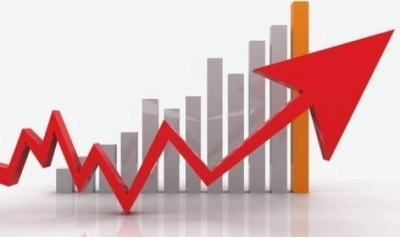
In Quarter IV 2019, the adjusted hourly labour cost (business days adjusted) registered a decrease rate of 0.27 percent compared to the previous quarter and an increase of 12.03 percent compared to the same quarter of 2018, according to data published by the National Institute of Statistics (INS) on Thursday.
Thus, in Q4 2019, the hourly labour cost (business days adjusted) increased in the majority of the economic activities compared to the previous quarter.
The most significant increases of the hourly labour cost (adjusted according to the number of business days) were found in real estate activities (7.75 percent), construction (6.94 percent), transportation and storage (5.94 percent), financial and insurance activities (5.69 percent), information and communication (5.35 percent).
Compared to Quarter III of 2019, the most significant decrease of the hourly labour cost (business days adjusted) was registered in education (-27.85 percent), determined by the increase recorded in the hours actually worked (a normal phenomenon for the current quarter determined by the starting of the new school year).
At a considerable distance, with relevant decreases in the hourly labour cost (business days adjusted) there were situated the activities related to arts, entertainment and recreation (-3.49 percent), public administration (-2.77 percent), mining and quarrying (-2.27 percent), respectively.
Compared to Q3, the direct costs component (wages) decreased by 0.29 percent, while the indirect costs component (non-wages costs) increased by 0.11 percent.
As against the same quarter of the previous year, the hourly labour cost (working days adjusted) increased in all economic activities.
The highest increases of the hourly labour cost (business days adjusted) were recorded in education (21.00 percent), as an effect of the enforcement of legal provisions, followed by constructions (19.85 percent), accommodation and food service activities (15.49 percent) and professional, scientific and technical activities (14.18 percent).
The lowest increases of the hourly labour cost (working days adjusted) were registered in human health and social work activities (6.10 percent), mining and quarrying (6.16 percent), respectively.
According to the INS, compared to the same quarter of the previous year, the increase of the direct costs component (wages) was 12.06 percent, whereas that of indirect costs component (non-wages costs) stood at 11.23 percent.
Romania's hourly labour cost up over 12pct in Q4 of 2019
Sursă foto: stiripesurse.ro
Distribuie articolul


Distribuie articolul


București 10°C
10°C
10°CArticole Similare
0
Foraj Sonde Videle acquires Raffles Energy and Zenith Resources; deal expected to close by end-August
0

1
Football icon Mircea Lucescu laid to rest with military honors
1

2
CCIR president urges shift from Chinese commercial presence to real investments in Romania
2

9
Philip Morris International Presents its Value Report 2025: change in motion
9

34
Tennis player Sorana Cirstea qualifies for semifinals of doubles event in Linz (WTA)
34

17
Romania men's national water polo team at third consecutive win in World Cup's Division II
17

20
Romania women's tennis team wins first match against France in Billie Jean King Cup
20

18
BNR's Badea: Euro adoption, a strategic goal tied to Romania's economic integration and institutional maturation
18

21
Roxana Minzatu: Erasmus mobility must be right for all, not just a chance for privileged
21

8
Gov't approves Romania's annual contribution to the Hague Conference on Private International Law
8

13
Transport minister signs financing contracts aimed at acquisition of electric vehicles and development of charging infrastructure
13
11
Most indices on the Bucharest Stock Exchange closed Thursday's trading session in positive territory
11
12
Transport minister: Softronic to complete 19-locomotive modernization contract ahead of schedule
12















Comentează