



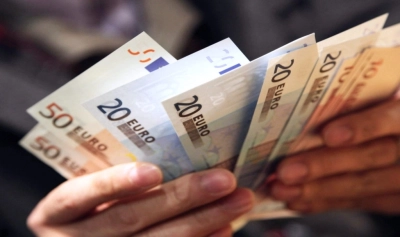


Revitalizing Romania's goal and strategy for joining the Eurozone can act as a credible anchor for maintaining a coherent macroeconomic adjustment path, argues National Bank of Romania (BNR) first deputy governor Leonardo Badea.
"In a context characterized by numerous constraints and high volatility, the objective of switching to the single currency reduces the risk of economic policy slippages and supports the continuity of reforms. More than a simple formal target, this objective can structure a clear roadmap for consolidating internal and external balances, favoring sustainable convergence. An essential effect of this process is the anchoring of investors' expectations. The credible commitment to monetary integration sends the signal that Romania takes on a predictable path, based on stability and economic discipline. This is also the reason why in most meetings in recent years with foreign institutional investors, they consistently inquired about the euro-adoption timetable, about the political and institutional commitments linked to it and about the target term. Therefore, revitalizing this objective would have favorable effects from the perspective of foreign capital flows," Leonardo Badea explains in an analysis.
He describes the euro adoption as a strategic goal aligned with Romania's economic integration and institutional development. Financially, joining the Eurozone is typically associated with lower financing costs, due to the elimination of currency risk and reduced risk premiums. This benefits companies through cheaper investment financing and households through more favorable lending conditions. Improved investor perception also supports the revaluation of financial and real assets.
Badea adds that adopting the euro deepens the integration of Romania's financial and banking system into the European architecture, including the Banking Union, strengthening resilience and improving capital allocation. He stresses that euro adoption is "a strategic and political choice, not just an economic one", noting that some countries with strong economic indicators - such as the Czech Republic and Poland - have chosen to retain monetary autonomy and exchange-rate flexibility as policy tools.
For smaller states, however, the calculus differs. Badea notes that countries such as the Baltic states, Slovakia, Slovenia, Croatia and Bulgaria have viewed the transition to the euro as both the culmination of economic integration and a political-geostrategic guarantee. Smaller economies tend to prioritize eliminating currency risk, lowering financing costs and securing deeper integration into European and global trade. In the Baltic states, he says, the euro adoption was also tied to firmly anchoring themselves in Western democratic structures and distancing themselves from Russia's sphere of influence.
He concludes that, beyond mandatory economic criteria, the success of the euro adoption depends on a broad and stable national political consensus. European experience shows that without cross-party support, the process becomes vulnerable to electoral cycles and institutional blockages. In some Central European economies, he notes, remaining outside the euro area reflects not only economic considerations but also the absence of lasting political agreement on giving up key policy instruments such as monetary policy and the exchange rate, which governments may prefer to retain as buffers during external shocks.


On the other hand, recent examples show that when a sufficiently coherent political majority exists, the process can advance decisively. "In Croatia, the switch to the euro was supported by a clear and continuous institutional commitment, reflected in its phased approach - macroeconomic adjustment, entry into ERM II, and joining the Banking Union - which allowed the strategic direction to be maintained regardless of short-term fluctuations," Leonardo Badea writes.
He explains that, in Romania's case, a project of this scale cannot be conceived without broad political backing from parties holding a strong parliamentary majority, because it requires a sequence of commitments extending beyond a single electoral cycle: fiscal consolidation, macroeconomic stability, structural reforms and participation in the European mechanisms that precede euro adoption.
"Political consensus would reduce the risk of a return to pro-cyclical policies or fiscal relaxation, which would cancel out the convergence gains achieved during the adjustment period. In this sense, political support is not only a matter of opportunity, but also of credibility. It helps anchor expectations, lower perceived risk and transform the objective of adopting the euro from a declarative aspiration into a genuine commitment. Without it, even significant economic progress may be insufficient to trigger or sustain monetary integration," Badea notes.
He adds that euro adoption can be an important step in Romania's economic maturation, but only with long-term political agreement. If achieved, it would provide stability, support continued convergence and consolidate the progress made so far into a lasting gain. "In my view, the euro is not just a currency; it is the economic expression of a strategic membership. For Romania, its adoption would mark the transition from an economy striving to maintain convergence to one fully participating in the decision-making mechanisms of the European economic architecture," Badea concludes.























Comentează