



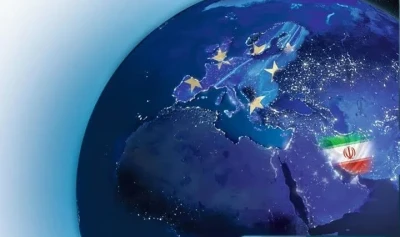


Europe remains vulnerable to geopolitical shocks in remote regions and although it invests in renewable energy, oil continues to be a central element of the European economy, says Chairman of the Smart Energy Association (AEI), Dumitru Chisalita.
In an analysis on Saturday, the energy specialist presented how other EU countries protect their population and economy from rising fuel prices, agerpres reports.
"Europe's reaction shows one essential thing: the continent remains vulnerable to geopolitical shocks in remote regions. Although the energy transition and investment in renewable energy are in full swing, oil continues to be a central element of the European economy. The crisis of March 2026 is thus a new reminder of this addiction. Measures adopted by governments may mitigate the short-term effects, but they do not solve the structural problem. As long as transport and a large part of the industry depend on fossil fuels, every major geopolitical tension will echo directly in the pockets of Europeans," Chisalita said.
According to him, the first two weeks of March 2026 "brought Europe back to a situation that many leaders had hoped to have left behind: the brutal volatility of the energy market". Thus, the increase in oil to close to USD 120 per barrel, fuelled by the conflict in the Middle East and the risks of transport through the Strait of Hormuz, has forced European governments to react quickly to avoid a new spiral in fuel prices.
"Europe's response was pragmatic but also fragmented. In the absence of immediate coordinated intervention at the level of the European Union, the states resorted to classic national instruments: price caps, tax cuts, market control and security measures for the transport of oil. The first reaction came from the countries of Central and South-Eastern Europe, where governments chose direct intervention in the market. Hungary, Croatia and Slovenia imposed caps on fuel prices or kept control mechanisms to limit rapid increases. The political logic is clear: fuel is not just an economic product, but a major social factor. The steep increase in the price of gasoline or diesel is immediately reflected in the cost of transport, food and basic goods."
He says that, however, capping prices is a double-edged sword. In the short term, it protects the population and hauliers. In the long run, however, it can distort the market and discourage supply, especially if the difference between the real and capped price becomes too large. For that reason, such measures are almost always temporary, said the specialist.


He mentioned two special measures taken by some European authorities: the state-owned oil company in Poland reduced margins on its own initiative, and in Denmark walking, cycling and public transport are promoted.
The second strategy, much more widespread in Western Europe, was to cut taxes and excise duties. Thus, Portugal offered fuel discounts, and Italy discussed variable excise duty mechanisms or temporary discounts. Romania also analysed a cut in excise duties to prevent exceeding the psychological threshold of RON 10 per litre.
In the opinion of the specialist, this solution has the advantage of intervening directly on the final price without completely distorting the market. However, the disadvantage is fiscal, believes the president of AEI, because fuels are a major source of income for national budgets. "Any cuts in excise duties mean lower revenues for the state, at a time when many European governments are already facing high budget deficits," the energy specialist explained.
According to him, in parallel, some states have tried to send a clear political signal to energy companies. France stepped up checks at gas stations for price gouging, and Italy discussed the possibility of taxing excessive profits of energy companies. These measures also have a symbolic dimension because they show the public that governments do not allow a geopolitical crisis to become an opportunity for excessive profits.
At the European level, the reaction was more cautious, the analyst said. The European Union has been monitoring the situation and points out that member states have about 85-90 days of strategic oil reserves. For now, Brussels has not decided to release these reserves, considering that global supply is not yet in danger.
"IEA member countries must normally hold reserves equivalent to at least 90 days of oil imports, precisely in order to be able to intervene in such crises," the AEI official said.
At the same time, some European states also acted strategically. The UK, Germany and Italy cooperated to protect the commercial transport of oil in the Strait of Hormuz, one of the world's most important energy routes. About a fifth of the oil traded globally passes through that area, and any disruption would have immediate effects on the markets.
"Europe has shown that it can react quickly. The question that remains is whether it can become sufficiently energy independent so that such crises no longer produce major economic and social shocks," the AEI president concluded his analysis.






















Comentează