



GreenGroup, through its GreenWEEE branch in Buzau County, which specialises in the recycling of waste electrical and electronic equipment (WEEE), has unveiled for the first time the results of the European project GRINNER, an advanced system that uses artificial intelligence and dual X-ray scanning to automatically detect batteries in discarded electronics.
According to the company, the purpose of implementing this equipment is to prevent fires caused by lithium-ion batteries and to optimise industrial processes, in a context where such incidents are becoming increasingly frequent across Europe, with over 30 fires reported weekly at recycling facilities.
'GRINNER is the response of an industry that has understood that the future of recycling is built through innovation. It is the result of three years of research, international collaboration, and a commitment to safety and efficiency. It is not just a technology, but a protective barrier for people, the environment, and industrial infrastructure. By automatically detecting batteries in electronics, GRINNER reduces the risk of fires, conserves resources, saves lives, and sets a new safety standard in the treatment of electronic waste. At the same time, it offers the industry a reliable, precise, and replicable solution for preventing major battery-related risks,' GreenWEEE General Manager Marius Costache is quoted as saying in a press release.
The GRINNER project has a total value of 3 million euros and is being developed by an international consortium comprising seven organisations from Romania, Belgium, Poland, Greece, Italy, Sweden, and the United Kingdom.
'From electric toothbrushes, remote controls and toys, to phones and portable speakers, millions of WEEE items arrive at collection and recycling centres every day. Many of these contain batteries that are difficult to identify visually, and without an efficient detection system, they can cause severe fires during mechanical processing or even during storage. The facility automatically detects batteries, such as lithium-ion, button, or AA types, from electronic waste at a speed of up to 1 m/s. The system operates fully automatically, not relying on the shape or appearance of devices, but on the material signature of the batteries, delivering accurate results regardless of positioning or casing,' the WEEE recycling specialist reports.
The investor notes that the technology is a first in Europe, and the fact that Romania hosts the first functional prototype confirms the local capacity to generate relevant solutions for global challenges.
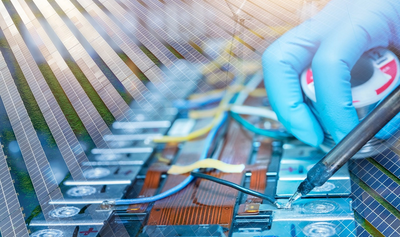
AI plus X-ray scanning system for battery detection in electronic waste
Sursă foto: Credit: Artinun Prekmoung / Panthermedia / Profimedia
Distribuie articolul


Distribuie articolul


București 7°C
7°C
7°CArticole Similare
22
ForMin Toiu: Romania fully covered evert seat allocated on evacuation flights
22

20
President Dan: We've discussed Middle East situation at the Supreme Council for Country Defence
20

17
Economic consequences of Middle East war analysed by Romania's Supreme Defence Council, says President Dan
17

14
SRI announces it maintains blue-cautious terrorist alert level
14

22
ForMin Toiu:Crisis peak has passed, at least from the perspective of Romanian citizens' assistance requests
22

8
Films by Romanian directors Giurgiu, Stefanescu, to run in international festivals in Thessaloniki, Sofia
8

11
Euro trades at RON 5.0937
11

13
ForMin Toiu appears before Committee on Foreign Policy
13
14
Rising fuel prices trigger chain effects in the economy (analyst)
14

18
INSCOP survey: 37.3% of Romanians believe PSD should remain in Government
18

12
'Easter 2026' philatelic issue in Romfilatelia shops as of Thursday
12

11
Event promoting STEM education showcases Zalau high schools awarded robotics projects
11

21
Increasingly fewer Romanians interested in a job abroad amid uncertain international context (survey)
21










Comentează