



The Romanian economy will record a 3.5% advance in 2019 and an advance of 3.1% in 2020, down one percentage point from the June 2018 forecast, according to the semiannual "Global Economic Prospects," published on Wednesday by the World Bank (BM).
Also, the international financial institution expects Romania to report for the year 2018 an increase of 4.1% in GDP, which is again down one percentage point from the June forecast.
The expansion is expected to ease in 2021, when Romania's economy will see an advance of 2.8%, the World Bank report said.
The international financial institution estimates that in Europe and Central Asia (ECA), a region including Romania, the economy slowed down to 3.1% in 2018, from 4% in 2017, reflecting the decline in Turkey's economic activity in the second half of last year.
Leaving Turkey aside, the regional growth remains unchanged at 2.9% in 2018, as slowing economic activity in countries like Bulgaria and Romania was offset by accelerated dynamics in the eastern part of this region, which benefited last year from the higher price for crude, according to the WB.
The Central European countries recorded a slower GDP growth in 2018. The weakening of exports and the lack of work force affected the growth in Bulgaria, Croatia and Romania. In contrast, despite the lack of employees in Poland, the economy of this country has accelerated slightly due to the solid level of consumption and investments.
The tax policy in the region has varied significantly, according to the World Bank report. Turkey committed to strengthen its monetary policy in order to curb inflation and stop the depreciation of its currency. In Romania, the cut operated in the income tax and the salary increases in the public sector have offset an increase in social contributions, which recorded the first surplus last year since 2012.
In most countries in Europe and Central Asia, the monetary policy is stable or relaxed. At the end of 2018, nine countries had lower interest rates than one year ago, while three other states increased their monetary policy interest rates: Romania, Ukraine and Turkey.
In Central Europe, work force shortages and the rising energy prices have led to a rising inflation, but the monetary policy stayed stable in most countries. An exception was Romania, where robust domestic demand resulted caused the upper limit of the inflation targeting to be exceeded, determining thus the strengthening of the monetary policy, according to the "Global Economic Prospects" report.
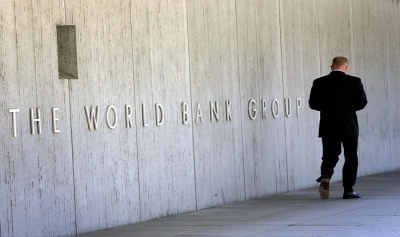
World Bank downgrades estimates for Romania's economic development in 2019 and 2020
Sursă foto: stiripesurse.ro
Distribuie articolul


Distribuie articolul

Explorează subiectul

București 7°C
7°C
7°CArticole Similare

12
INS: Romania counts 113,303 enterprise groups in 2024, 108,401 of them multinationals
12

14
Survey: 75% of Romanian employees feel financial pressure, over a third seek extra income
14

16
PM Bolojan: Romania does not need a political crisis at the moment, it needs stability
16

17
Hanwha Aerospace allocates 1.3 billion euro to strengthen Romania's sovereign defence capabilities
17

14
ForMin Toiu attends informal meeting of the Foreign Affairs Council in Kyiv
14

11
Project on effective use of EU funds, sustainable development to be launched in Bucharest
11

12
Albanian PM: Aims to conclude EU accession talks by 2027, join by decade's end
12

8
PM Bolojan: EU's eastern border must be stronger; we need to strengthen both military and economic security
8

12
INTERVIEW/U.S. ambassador to Bucharest: Our partnership has never been stronger, we aim to advance economic opportunities
12

16
Number of building authorisations issued for residential buildings down 8.4% in January-February
16

12
Prime Minister Bolojan warns of tougher 2026, cites Middle East impact on economy
12

18
PM Bolojan and EC Executive Vice-President Minzatu discuss boosting PNRR commitments and cohesion funds
18
34
Bolojan: Government to cut fuel excise, diesel prioritised
34















Comentează