



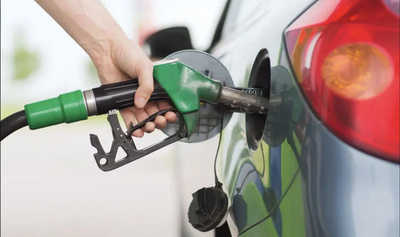


Measures included in the fuel ordinance will have limited effects on pump prices, while state intervention is largely symbolic, economic consultant Adrian Negrescu said.
"Authorities have dropped the idea of capping margins at 50%, a decision that would have created shortages on the market. They have removed the provision imposing fines of 10% of turnover for companies that do not comply with the ordinance. It was an extraordinary measure," he wrote on his Facebook page on Thursday.
According to the consultant, limiting exports could backfire on Romania, given that 46% of reserves are located abroad.
"If other countries act accordingly, the effects could be catastrophic in the event of a major fuel crisis," the consultant warned.
On the other hand, defining the commercial margin requires further clarification to avoid room for interpretation and, in particular, speculative behaviour by companies or abusive action by the state, Adrian Negrescu said.
"The effects at the pump will be symbolic, as the decisions taken do not have the power to influence price dynamics. I hope the Energy Ministry will present concrete data," he pointed out.
In his view, the state avoided adjusting VAT and excise duties for an obvious reason, as these are "the main sources on which the state budget relies in 2026, in an extremely difficult financial context".
"The idea of offering compensation at the pump to all Romanians is absurd and economically unfounded. The state has no reason to help someone who owns an expensive car and complains about the price of diesel," Negrescu stressed.


The correct solution is to direct subsidies towards business categories with inflationary potential, he added.
"As long as the price of oil and diesel quotations rise internationally, any solution adopted by the Romanian state, other than reducing VAT or excise duties, will only have a symbolic character," the cited source said.
He believes that "the hesitations and changes to the fuel ordinance demonstrate an increasingly glaring lack of competence in drafting legislation with an impact on the economy".
The government on Thursday approved an emergency ordinance declaring a crisis situation on the crude oil and petroleum products market, petrol and diesel, for the period April 1 - June 30, a normative act introducing measures to protect the economy and the population.
The period of application of these measures may be extended successively for periods of up to three months, as long as the circumstances that led to the crisis situation persist, according to a government statement.
Thus, the commercial margin applied by economic operators producing, importing, distributing and/or selling petrol and diesel is limited to the average margin applied in 2025 by each operator, with exports and intra-Community deliveries exempted.
"The measure aims to discourage possible inappropriate behaviour by economic operators and potential speculative tendencies that could lead to unjustified price increases for these products," the government said.
The average annual value of the commercial margin for 2025, as well as the calculation that determined it, must be communicated to the National Agency for Fiscal Administration.
"In the event that margins exceeding the limits set in the normative act are identified, fines ranging between 0.5% and 1% of turnover achieved in the year prior to the sanction will be applied," the cited source added.
At the same time, the ordinance introduces the possibility for economic operators to reduce the biofuel content in the volumes of petrol placed on the market from 8% to a minimum of 2% during the period of application of the protective measures.
Furthermore, in order to ensure domestic consumption needs, exports of diesel and crude oil will only be carried out after obtaining approval from the Ministry of Economy, Digitalisation, Entrepreneurship and Tourism and the Energy Ministry.
Sanctions are also introduced, so that "exports carried out without the necessary approvals will be sanctioned with fines ranging between 5% and 10% of turnover, as well as the complementary measure of confiscating goods intended for, used in or resulting from the contraventions".
The ordinance also includes amendments regarding the natural gas market and establishes a clear mechanism for the proportional allocation of available quantities, depending on the estimated consumption of each supplier's clients. At the same time, explicit calculation rules are set out, including determining minimum stocks, calculating differences between estimated consumption and allocated quantities, and recalculating quantities depending on consumption developments.

























Comentează