



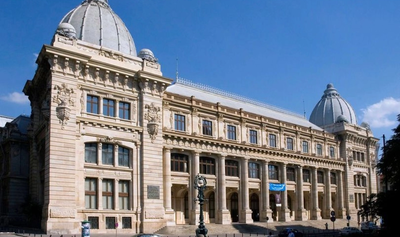


The themed exhibition "Princely and Royal Thrones", which reconstructs the stories of six thrones - objects with exceptional historical, symbolic and artistic significance, recalling key moments and major figures of national history - will open on Thursday at 13:00 at the National History Museum of Romania (MNIR).
According to an MNIR press release, by showcasing these highly valuable cultural assets from the museum's collection, the organizers aim to retrace the paths these objects have followed and the "trials" they have undergone over time, agerpres reports.
The imposing throne used by Grigore Dimitrie Ghica, the first native ruler of Wallachia after the end of the Phanariot era (1822 - 1828), stands out through its decorative elements of diverse origin (Italian Neo-Renaissance, Neoclassicism etc.), characteristic of the European eclecticism of the first half of the 19th century.
The throne of Gheorghe Bibescu, the second constitutional ruler of Wallachia (1842 - 1848), who abdicated following the outbreak of the 1848 Revolution, was most likely crafted in an Austrian workshop and displays features of the so-called "Blondel style", which was fashionable in Vienna after 1840.
The thrones of Alexandru Ioan Cuza and his lady Elena Cuza, representative of the Napoleon III (Second Empire) style, were used for a long period also by Prince/King Carol I and Princess/Queen Elisabeth.
"Thus, these thrones are linked to two major moments in modern history: the Union of the Romanian Principalities (1859), and the proclamation of the Kingdom (as they were part of the setting of the May 10, 1881 Coronation ceremonies)," MNIR notes.


Also on display is the spectacular throne of Queen Elisabeth, created in 1884 by the Krieger House in Paris, featuring Neo-Byzantine stylistic characteristics, with décor inspired by a revival of medieval Romanian art.
The exhibition also includes the imposing solid-wood throne with a two-metre-high backrest used by the kings of Romania in the Chamber of Deputies, made in the early 20th century and considered at the time "a marvel of decorative art".
The exhibition will be open until April 15, from Wednesday to Sunday (09:00 - 17:00 in winter schedule, and 10:00 - 18:00 in spring schedule).


























Comentează