



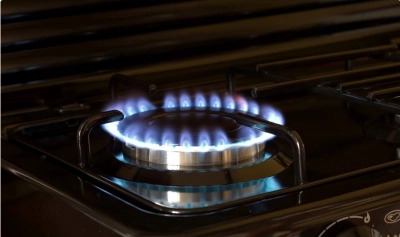


The introduction of an administrative price for natural gas could generate new food prices in 2026, by transferring costs to industry, given that Romania recorded the highest food inflation in the European Union in 2025, according to an analysis by the Smart Energy Association (AEI).
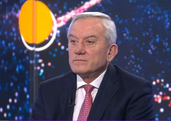
"Romania, the champion of price increases. Why is 2026 likely to be worse than 2025? The data leave no room for optimistic interpretations. According to the latest Eurostat statistics on food inflation in the European Union, Romania ranked first in terms of food price growth in 2025. While the European average was 2.8%, Romania recorded an increase of 6.7% - more than twice the EU average and the highest rate of all member states. This unwanted performance is not a conjunctural accident, it is the result of a combination of public policies, structural vulnerabilities and postponed decisions," says Chairman of the Smart Energy Association (AEI) Dumitru Chisalita.
In his opinion, the signals for 2026 indicate not a correction, but a real risk of worsening.
"The decision to set the administrative price for natural gas will reach the plate in 2026. The government's intention to introduce an administrative price for gas for the households creates a well-known economic mechanism: the costs that will no longer be paid by household consumers will inevitably be transferred to industry. As shown by the analyses carried out by the Intelligent Energy Association (Impact of the administered prices/Analysis of the share of energy cost in food), this type of intervention does not eliminate costs, but redistributes them, with direct effects on the final prices of consumer goods." .
Estimates indicate a possible increase in the price of gas for industry by up to 15% from 2025.
"In an economy where the food sector is heavily dependent on energy, such a development cannot remain without consequences. The additional costs will inevitably be found in the price of food, with an estimated average impact of about 5% of this component alone. The available forecasts (European Central Bank) show a moderation of inflation in the euro area, where the total rate is expected to fall towards 1.6-2.0%, and food inflation to be around 2.4-2.7%. Energy, as a whole, could even have a neutral or negative impact on European inflation," Chisalita said.
On the other hand, he adds that Romania starts from a much more fragile position. Thus, after a total inflation of 8.6% in 2025, the National Bank of Romania anticipates a decrease in 2026, with a general rate of around 3.7% at the end of the year.


"However, this value masks major differences between the components of inflation. Food remains extremely sensitive to energy costs, and a rapid reduction is unlikely. Natural gas and electricity are reflected in the food prices through three essential channels: industrial processing (ovens, steam, heating), transport and storage (cold chains, logistics) and agricultural inputs (fertilisers, greenhouse heating, grain drying). When one of these channels is affected, the effect multiplies throughout the production chain."
An AEI estimate shows that food inflation in Romania in 2026, in a scenario with gas for industry more expensive by 15%, could reach about 7.5-9%. In other words, there are chances that 2026 will bring even higher food inflation than in 2025.
"The difference in food inflation in Romania, as against elsewhere in the European Union, would thus become even more pronounced, from a ratio of 2.39 times above the EU average in 2025, Romania could reach 3.1-3.3 times above the European average in 2026. We are not just talking about a problem of prices, but about a problem of economic competitiveness, social equity and policy coherence. If food is one of the most sensitive components of living standards, then food inflation can no longer be treated as a secondary indicator," says the AEI official.
According to him, in the absence of decisions that take into account the chain effects of administrative interventions, "Romania risks remaining not only the champion of price increases, but also the clear example of how hidden costs inevitably end up on the consumer's plate."

















Comentează