



Romania's crude steel production stood at 3.62 million tons in 2018, up 5.3 percent from the year before, according to the data centralized by the National Institute for Statistics (INS) potrivit Agerpres.
In 2018, compared to 2017, most raw material inputs have risen. The consumption of pellets for furnace production increased by 11.2 percent. There have been increases in the consumption of iron ores and concentrates (+ 8.7 percent) and the consumption of ferrous conglomerate (+ 4.8 percent), which have led to an increase in the production of blast furnace by 8,9 percent. There is also an increase by 3.6 percent in the consumption of ferro-alloys for the production of crude steel, which is also reflected in the increase of crude steel production by 5.3 percent against 2017.
Investment spending in the metal processing sector declined by 10.2 percent in nominal terms from 2017.
Gross energy consumption in the metallurgical sector recorded a 1.2 percent increase compared to 2017, while the electricity supply was up 0.1 percent. The electricity supply stood at 2,735.1 GWh, up 0.1 percent from 2017 and this was almost entirely ensured by the national system.
Of the total electricity used in the metallurgical sector, the internal consumption of the units accounted for 86.7 percent (2,371.1 GWh). Consumption of equipment and steel plants was 1,891 GWh (79.8 percent of consumption), with 480.1 GWh (20.2 percent) being used by auxiliary plants and domestic services.
By type of equipment and steel plants, the largest share of energy consumption was recorded by the electric melting and continuous casting furnaces (688.6 GWh, 36.4 percent, respectively), followed by rolling mills (560.4 GWh, namely 29.6 percent) and steel production capacities (445.2 GWh and 23.5 percent, respectively).
Gross energy consumption in the metallurgical industry in 2018 stood at 59,861.6 TJ, increasing by 1.2 percent against the previous year. Thus, 50.7 percent was used for the furnace load preparation section, 20.9 percent for other uses, 8.9 percent for the cast iron production, 9.3 percent for steel production and 5.6 percent for rolling mills.
In terms of resources used in the metallurgical industry, in 2018, solid fuels held a weight of 51.2 percent (50.6 percent in 2017), gas fuels 33.1 percent (33.5 percent in 2017) and electricity accounted for 14.1 percent (14.3 percent in 2017).
Of total solid fuels, 60.3 percent is represented by coke, the main fuel used in the metallurgical industry.
Romania's crude steel production up 5.3 percent in 2018
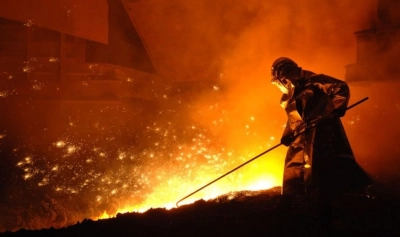
Sursă foto: boursier.com
Distribuie articolul


Distribuie articolul


București 7°C
7°C
7°CArticole Similare

27
Archpriest Zaharia Peres: Easter Radiance breaks the darkness and restores eternal Light
27

28
Romania secures 2 - 0 win over Georgia in Billie Jean King Cup play-off
28

25
Cardinal Claudiu in Easter Pastoral Letter:Church teaches the power of light cannot be wiped out by darkness
25

21
Patriarch Daniel's Easter message calls for peace, compassion and good deeds
21

16
Cotroceni Palace to host Bucharest Nine and Nordic Summit on May 13
16
26
Foraj Sonde Videle acquires Raffles Energy and Zenith Resources; deal expected to close by end-August
26

27
Football icon Mircea Lucescu laid to rest with military honors
27

11
CCIR president urges shift from Chinese commercial presence to real investments in Romania
11

30
Philip Morris International Presents its Value Report 2025: change in motion
30

34
Tennis player Sorana Cirstea qualifies for semifinals of doubles event in Linz (WTA)
34

18
Romania men's national water polo team at third consecutive win in World Cup's Division II
18

20
Romania women's tennis team wins first match against France in Billie Jean King Cup
20

20
BNR's Badea: Euro adoption, a strategic goal tied to Romania's economic integration and institutional maturation
20















Comentează