



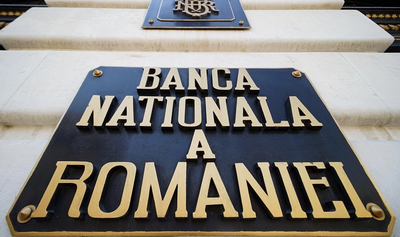


Maintaining the key interest rate at 6.5% confirms that the Romanian economy is entering a consolidation phase, being a signal of balance from the National Bank of Romania, after the tax increases, according to an analysis carried out by a specialized platform.
Practically, maintaining the current level of the key interest rate has as its main objective the control of inflation and the protection of purchasing power, in a context in which the financial market is once again starting to offer solid benchmarks for saving, lending and investments, agerpres reports.
"The economic context in Romania is entering a consolidation phase, and the BNR's decision to maintain the key interest rate contributes to controlling inflation and protecting purchasing power. Even if fiscal challenges persist, the financial market currently offers solid support points," said Claudiu Trandafir, economist and founder of the OferteBancare.ro platform, in a statement.
Inflation has entered a downward trajectory, reaching 9.7% at the end of 2025, an evolution that contributes to creating a more predictable environment for the national currency. Supported by the prudent policy of the National Bank of Romania, the leu benefits from increased interest from investors, maintaining a stable EUR/RON exchange rate being a key element for the general economic balance, according to an analysis carried out by OferteBancare.ro, submitted on Tuesday by AGERPRES.
"In this context, the national currency benefits from increased interest from investors, and the stability of the EUR/RON exchange rate remains an essential pillar for macroeconomic balance and market confidence," added Trandafir.
For the population, the current monetary framework creates clear opportunities to protect and diversify savings. Banks maintain attractive deposit interest rates, between 5% and 6%, and government securities intended for the population offer competitive yields, with the major advantage of not being taxed, which raises the real yield above many classic savings instruments, under conditions of reduced risk.


"It is one of the most favorable contexts in recent years for saving. Both bank deposits and government securities offer efficient solutions for protecting capital," the economist claims.
According to him, in the lending segment, even if the IRCC and ROBOR indicators are expected to remain relatively stable in the first half of 2026, the banking market provides consumers with immediate optimization solutions, through fixed-interest refinancing starting at 4.79%, a level significantly below the inflation rate, which offers long-term stability and predictability.
"The move to fixed interest rates below the inflation level provides budgetary peace of mind and represents a cost-securing solution for consumers," he believes.
In his opinion, looking ahead, analyses indicate the possibility of gradual monetary easing in the second half of 2026.
"If inflation stabilizes within the 7-8% range, the first decrease in the key interest rate is likely in the third or fourth quarters, marking the beginning of a new cycle of increased accessibility of credit," added Claudiu Trandafir.
OferteBancare.ro is a platform that offers financial education, transparent comparison of credit offers and digital tools for both clients and brokers, facilitating informed and correct decisions. Through integrated services - from financial consulting to real estate, design and construction - OferteBancare.ro aims to bring transparency, trust and added value to the relationship between clients, brokers and banks.


























Comentează