



In several villages in southern Muntenia and, especially, in Gorj and Olt counties, the celebration of the Finding of the Head of the Holy Prophet John the Baptist, which always falls on February 24, is called Dragobete, writes the folklorist and ethnographer Simion Florea Marian. (Romanian Holidays - Ethnographic Study, Romanian Cultural Foundation Publishing House)
Dragobetele, in these parts, is a beautiful day of celebration for big boys and girls, and even for young men and women. In some communes, also in Muntenia, recalls Simion Florea Marian, the people celebrate Dragobete specifically to be protected from diseases.
Depending on the ethnographic area, Dragobetele, also called Cap de Primavara (Beginning of the Spring), was celebrated on one of the days between the end of February and the beginning of March. (Romanian Holidays and Customs, Ion Ghinoiu, 2003)
According to the legend, Dragobtele (Dragomir, says the legend) is the son of Baba Dochia (The Old Dokia) and represents, in opposition to her, the positive principle. Dragobetele, the bearer of love and good mood, is celebrated on the day of the mating of birds that gather in flocks, chirp and start building their nests. That's why girls and boys looked forward to and celebrated Dragobetele to be in love all year long.
Considered, locally, the first day of spring, on the day of Dragobete, girls and boys gathered in groups and went out shouting and shouting in the fields, from where they collected two-leaf squill and sweet violets (Viola odorata). At Sanziene (Midsummer), they were picking two other flowers, roji (a kind of wild rose) and dropwort (Filipendula vulgaris), which would be sisters of two-leaf squill and sweet violets, dried since spring. The flowers had to be tied in bouquets and given via water, because the gathering of sister flowers, which can never reach and never meet, was considered in heaven as half of Sarindar (subsequent 40-day prayer at mass). (Sezatoarea magazine, XII, 1904)
On Dragobete day, non-migratory birds gather in flocks, chirp, fly, mate and start building their nests, where their young will grow. The unpaired ones remain pairless until next year's Dragobete. In the same way, girls and boys had to meet, make Dragobetele, to be in love throughout the whole year. "In the villages where the custom is preserved, the saying can still be heard today: Dragobete kisses girls! Considering that kissing on Dragobete day is auspicious, girls let themselves and even wanted to be kissed by boys". (Romanian Mythology - Dictionary, Ioan Ghinoiu)
In the Mehedinti area, the buds of forest trees, picked and worn by girls, in their ears, on Dragobete day, a symbol of youthful love, are called dragobete.
Dragobetele, the Romanian tradition of Valentine's Day
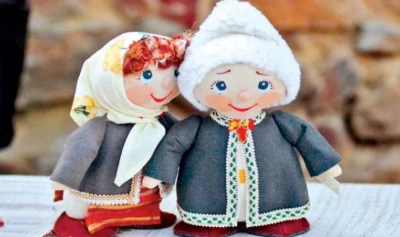
Sursă foto: stiripesurse.ro
Distribuie articolul


Distribuie articolul


București 6°C
6°C
6°CArticole Similare

21
Tugboat sunk/ Defense minister announces that Army divers recover body of another deceased person
21

10
FinMin Nazare, about budget: Situation must be unblocked; Prime Minister Ilie Bolojan was informed
10

15
ASE's Dobrea : The ASPES financial education programme will be extended nationwide
15

12
Medical costs prompt Romanians to delay doctor visits (survey)
12
14
Chinese ambassador, Botosani County Council president discuss business opportunities tied to Ukraine's reconstruction
14

13
Budget2026/ Grindeanu calls coalition meeting on Thursday at Parliament (sources)
13

15
Romanian public broadcaster defends Eurovision entry 'Choke Me' as "a metaphor"
15

17
Kelemen Hunor: Budget will definitely pass, coalition will move forward with Bolojan as prime minister
17
21
Drone fragments discovered in Romania after Russia's attacks against Ukraine
21

17
Romania's travel agencies are constantly monitoring situation generated by recent events in Iran
17

12
Parliament-budget2026/LabMin Manole:Votes were expressed as each one considered appropriate,package should not be subject of negotiation
12

18
Troops from Romania , 12 other nations to participate in Sea Shield Black Sea exercise
18

21
The Economist Romania Government Roundtable regional conference, in Bucharest, between March 30 and April 1
21













Comentează