



The annual inflation rate in Romania will surge markedly in Q3 2025, under the transitory impact of the expiry of the electricity price capping scheme and the increase in VAT rates and excise duties starting August 1, while in the following three quarters it will come down relatively slowly, on a fluctuating path considerably higher than that in the previous projection, the National Bank of Romania (BNR) said on Friday.
The BNR Board analysed and approved, at a Friday's monetary policy meeting, the August 2025 Inflation Report, a document that incorporates the latest available data and information.
According to the forecast included in the report, the annual inflation rate will surge markedly in Q3 2025 under the transitory impact of the expiry of the electricity price capping scheme and the increase in VAT rates and excise duties starting August 1, while in the following three quarters it will come down relatively slowly, on a fluctuating path considerably higher than that in the previous projection. However, the indicator will witness a steep downward correction in Q3 2026 once the direct inflationary impact of the two supply-side shocks has faded out, and thereafter it will decrease gradually, re-entering and falling deeper into the variation band of the target towards the end of the projection horizon, amid stronger disinflationary pressures from the aggregate demand deficit that is anticipated to widen much faster than in the previous projection, given the fiscal adjustment packages implemented as from August 2025.
Uncertainties are, nevertheless, further associated with the measures likely to be adopted in the future in order to continue budget consolidation in line with the National Medium-Term Fiscal-Structural Plan agreed with the European Commission and with the excessive deficit procedure.
High uncertainties and risks to the outlook for economic activity, implicitly the medium-term inflation developments, continue to arise from the external environment, given the war in Ukraine and the Middle East situation, but especially amid the global trade tensions, affecting the developments in the global economy and in international trade, as well as amid the potential effects generated by the US-EU trade agreement.
At this juncture, the full absorption and use of EU funds, especially those under the Next Generation EU programme, are essential for partly counterbalancing the contractionary effects of budget consolidation and of geopolitical/trade conflicts, as well as for carrying out the necessary structural reforms, energy transition included.
The ECB's and the Fed's monetary policy decisions, as well as the stance of central banks in the region, are also relevant.
BNR says that the annual inflation rate continued to increase in June 2025, going up to 5.66% from 5.45% in May, amid further hikes in food and fuel prices, which outweighed in terms of impact the drop in electricity and natural gas prices.
Thus, in Q2 2025 as a whole, the 12-month inflation rate went up more than expected, from 4.86 % in March, under the influence of higher food prices, especially fruit prices - inter alia amid the unfavourable weather conditions in the region -, whereas the new advance posted during this period by the dynamics of energy prices was more than offset by the opposite evolution in the tobacco product segment.
In turn, the annual adjusted CORE2 inflation rate stopped yet again its downward trend in Q2 2025, rising to 5.7% in June from 5.2% in March. The upswing was driven by the step-up in some agri-food commodity prices and the gradual pass-through of higher wage costs to some consumer prices, as well as by the increases in short-term inflation expectations and in the EUR/RON exchange rate, the impact of which was to a small extent mitigated by disinflationary base effects and the downward trend in import price dynamics.
The annual inflation rate calculated based on the Harmonised Index of Consumer Prices (HICP - inflation indicator for EU Member States) rose to 5.8% in June 2025 from 5.1% in March 2025. The average annual CPI inflation rate stood at 5.1% in June, the same level as in March 2025, while the average annual HICP inflation rate edged down to 5.3% in June, from 5.4% in March 2025.
Based on the currently available data and assessments, as well as in light of the elevated uncertainty, the BNR Board decided in the meeting of August 8, 2025, to keep the monetary policy rate at 6.50% per annum. Moreover, it decided to leave unchanged the lending (Lombard) facility rate at 7.50% per annum and the deposit facility rate at 5.50% per annum. Furthermore, the NBR Board decided to maintain the existing levels of minimum reserve requirement ratios on both leu- and foreign currency-denominated liabilities of credit institutions.
In May this year, BNR upwardly revised to 4.6% from 3.8 % its inflation forecast for the end of 2025.
Annual inflation rate in Romania to surge markedly in Q3 2025 (central bank)
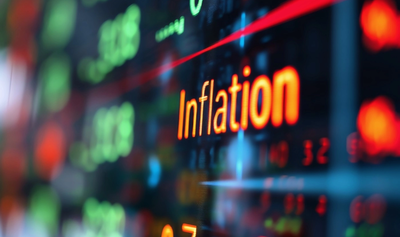
Sursă foto: Michael Piepgras / Panthermedia / Profimedia
Distribuie articolul


Distribuie articolul


București 21°C
21°C
21°CArticole Similare

10
Cardinal Claudiu: Prayer must rise for Ukraine, Middle East; light cannot be overcome by darkness
10

9
Easter food is getting more expensive: cocoa powder and chocolate, biggest price increases; radishes,only ones cheaper(statistics)
9

13
Academy President calls for return to values, virtues, as country will move forward through them
13

13
Minister of Energy: Petromidia Refinery is operating at maximum capacity
13

18
Negrescu: Metrorex wants to increase price of trip from 5 to 7 lei; unprecedented price increase in passenger transport
18

10
Anonimul Film Festival opens submissions for short, feature competitions; May 20 deadline
10

21
Bucharest Sector 4 mayor, US Special Envoy for Global Partnerships discuss investments for Capital development
21

34
France's Macron expected in Romania in early May (sources)
34

12
Competition watchdog to make sure companies not artificially increasing prices
12
16
Sighetu Marmatiei ring road to be built on 40-million-euro investment
16

13
Strong winds to grip most of Romania throughout Tuesday
13

10
Romanian Red Cross to organise Health Marathon diabetes prevention campaign
10

20
Only 20pct of Romanians shop above average for Easter
20















Comentează