



The terrorist alert level in Romania remains blue, meaning cautious, the Romanian Intelligence Service (SRI) informed on Tuesday, reporting that terrorist threats elsewhere in Europe is current and rising.
"The recent terror attacks in Europe, France (Paris, Nice, Avignon) in October and Austria (Vienna) on November 2, confirm a current rising nature of terror threats in Europe even as the continent has been facing a deep health crisis," SRI says in a Facebook post.
According to SRI, "terrorism has maintained its pattern in recent years: small-scale attacks using easily available weapons (knives or firearms), conducted by individuals with a jihadist ideological affiliation, but no proven links with terrorist organisations."
Unlike most of the recent attacks, says SRI, the one in Vienna on Monday resembles the attacks in Paris at Bataclan five years ago and the issue of terrorists' access to firearms, in a Europe where national arms control policies are very strict.
According to SRI, "sensitive issues, such as caricatures of the Prophet Muhammad, have once again proved to be the trigger for a series of attacks, but their real motivation is jihadist-terrorist, based on the ideology of global jihad, in which The West / Christianity are considered enemies of the Muslim world."
Most often, says SRI, "the attackers are people who do not have clear links with terrorist organisations, but express their adherence to organisations that promote and support jihadist ideology." "In the case of the Vienna terrorist, the Austrian authorities thwarted his attempt to join the jihad organisation Daesh in Syria, sentencing him to prison in 2019 for his intentions to travel for terrorist purposes."
According to SRI, there are also attackers who are "lone actors" and who are very difficult to identify by security and intelligence bodies in the absence of concrete links with a terrorist organisation and indications that they could set up a terrorist attack."
"Terrorists know very well how to work technological developments to their advantage in order to disseminate their ideology on the Internet, to communicate through encrypted applications without fear of being intercepted, to procure online or through organised crime groups what they need to mount a terror attack," explains SRI.
According to the service, "the process of radicalisation, through which seemingly normal people, newly arrived in Europe or second or even third generation European citizens, are transformed into potential terrorists, is a very difficult one to detect and counter."
"Radicalisation is triggered and sustained by systematic propaganda, initially generated by Daesh or Al Qaeda, and later cascaded through mechanisms such as 'like' or 'share' on social media. The main message of such propaganda, which initially called for jihadist support by moving to the Syria-Iraq region to fight in the Islamic caliphate, is an urge to its followers to carry out attacks wherever they are and by any means at hand: vehicles, knives or firearms, arson, etc.," says SRI.
Thus, in Europe, an area "of free movement and individual freedoms, terrorists abuse these advantages to conduct terror attacks."
"Even when the freedom of movement amid the COVID-19 pandemic is limited, there are still sufficient communication and movement tools so that even countries like Romania, which have not faced terrorist attacks in the recent past, may not feel safe from such risks. The Vienna terror attacks happened in a Central European country that has also been spared significant terror attacks in recent history, and that is a warning that any country in Europe could be a target for terrorists."
The Romanian Intelligence Service highlights the fact that it permanently co-operates both with its domestic institutional partners within the National System for Preventing and Combating Terrorism (SNPCT), and with its external partners in order to prevent the materialisation of any terrorist threats on Romania's national soil.
In order to support public information, SRI has published on its website www.sri.ro, in the "What you can do" section, self-protection guides and tips for reporting potentially terrorist situations.
Terrorist allert level set at cautious in Romania as terrorist threat rises in Europe
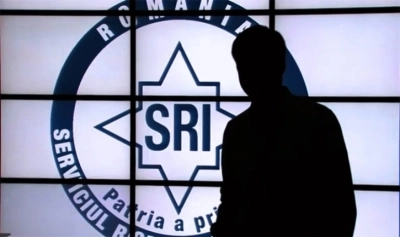
Sursă foto: www.profit.ro
Distribuie articolul


Distribuie articolul


București 9°C
9°C
9°CArticole Similare
17
Inter-institutional training on the Danube part of Sea Shield exercise
17
12
OECD accession is not just diplomatic target but also transformative process (foreign minister)
12

14
Gov't decides to promote Friday, in governmental meeting, reduction in diesel excise duty by 30 bani
14

15
In call with Dutch counterpart, Culture minister thanks Netherlands for efforts to recover ancient artifacts
15

17
Heineken invests EUR 12 million into low-carbon production at Craiova and Ungheni facilities
17

11
For a party to remain relevant, it must be consistent and establish its own political lines (Bolojan)
11

19
Ancient gold artifacts stolen in Drents Museum heist handed over to Romania
19

16
Romania to start vaccine negotiation with Pfizer as ill-considered decisions backfire
16

24
President Nicusor Dan: I am glad Dacian bracelets and Cotofenesti Helmet have been recovered
24
9
Finance Ministry starts reorganising Romanian Customs Authority to increase efficiency
9

11
Government takes urgent measures to ensure continuity of uranium mine conservation activities
11
33
Romania not a military target for Iran, but will feel the economic fallout (expert)
33
12
BNS welcomes Government's decision to reduce the excise tax on diesel by 30 bani/liter
12













Comentează