



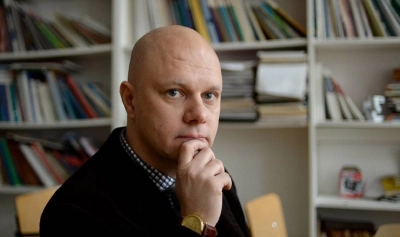


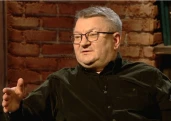
The war in Ukraine is one of the longest wars in Russia's history, comparable in length to the First and Second World Wars, Professor Ioan Stanomir told Agerpres.
'It is the longest front since the Second World War in Europe - from the Carpathian Mountains to the Black Sea. This is something that must nevertheless be taken into account. It is not the Republic of Moldova, it is not Ossetia, it is not Georgia, it is not Nagorno-Karabakh. It is something of an entirely different scale and a frozen conflict conducted over such a distance is not entirely frozen because it consumes vast resources and Russia's human losses are overwhelming,' Professor Stanomir explained in a statement given to AGERPRES in the context of the fourth year since the start of the Russian Federation's aggression against Ukraine.
According to him, Russian human losses in the war in Ukraine exceed those in the war in Afghanistan.
'We tend to regard Russia's human resources as inexhaustible. But I would stress the fact that their losses are enormous. They are far, far greater than those in Afghanistan. And the duration of the war has now exceeded the duration of what they call the Great Patriotic War. That lasted from June 1941 to May 1945. Now - from February 2022 to February 2026 and it continues. It is one of the longest wars in Russia's history, comparable in length to the First and Second World Wars,' Ioan Stanomir pointed out.
The political scientist underlined that the war in Ukraine has once again demonstrated that in international politics 'the main argument you can rely on when engaging in dialogue with a country such as Russia is military power.'
'Those who cannot mobilise military power have no credibility whatsoever in the eyes of the Russian state. Now, the problem that undermined the position of European nations was the chronic underfunding of their armies in the years following the end of the Cold War,' he added.
Ioan Stanomir mentioned that sanctions are being applied to the Russian Federation by a group of nations. 'These are not universal sanctions, they are not sanctions imposed by the United Nations. They are measures imposed by groups of nations, mainly European nations, the United States, Japan, Australia, Canada, other countries that are ideologically and strategically close to the West and part of it. As such, there are many countries in this world that not only fail to observe the sanctions but also do business with Russia. One example, the most obvious, classic one, is the People's Republic of China. It is something we know, but pretend not to know for diplomatic reasons. The shift recently noticed concerns the attitude of the United States towards the Russian Federation's shadow fleet. Within the blockade imposed against Venezuela, Russian interests were indirectly hit because part of the Venezuelan flotilla was in fact Russian and it became clear that, many times, when American forces boarded a vessel, the crew was linked to the Russian Federation,' Professor Stanomir pointed out.

Thus, he says, these sanctions are limited in effect, 'first because you have to be very determined to enforce sanctions at sea, in the maritime space, and secondly because the People's Republic of China and, to some extent, India are very important nations that break this sanction bloc.'
The war in Ukraine, Professor Ioan Stanomir said, has led to the rearmament of European countries.
'All European nations, including those that are hostile to Ukraine, are making efforts to rearm. You have noticed, for example, that Slovakia is also purchasing armaments. [U.S. Secretary of State] Marco Rubio highlighted that the Slovaks wish to purchase American aircraft to protect their airspace. The attitude towards Ukraine is another matter, it is a sensitive dossier, because Hungary and Slovakia, and to a lesser extent the Czech Republic, are reserved, to put it elegantly, regarding the assistance granted to Ukraine,' the political scientist pointed out.
In Professor Stanomir's opinion, Romania has done, 'within the limits set by its own political regime and its own domestic context, what could be done' to help Ukraine over these four years.
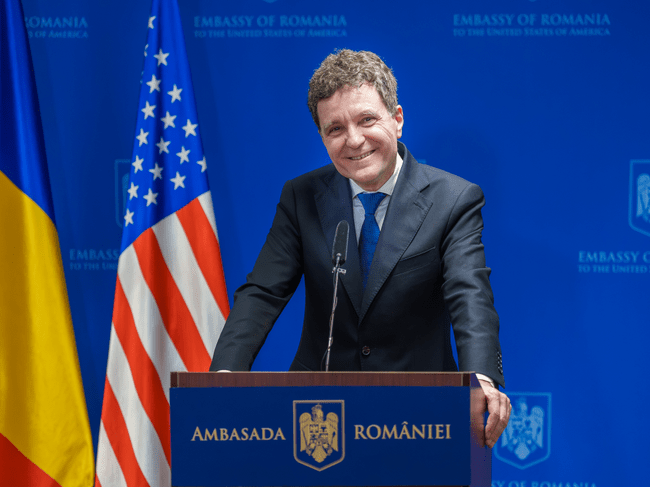
'President Iohannis was determined not to make certain decisions public, perhaps that was right, perhaps that was wrong. President Nicusor Dan is somewhat more open in terms of communication. Romania must rearm, Romania is rearming and above all Romania must rebuild its defence industrial base, both through domestic investment and through international investment. There is no point buying armaments if you cannot generate your own ammunition. And it is shameful that the shipyard in Galati can produce vessels for important European nations but not for Romania. It is a disgrace. And the fact that we are unable to provide orders to the Galati Shipyard is proof of irresponsibility and of undermining our national interest,' he detailed.
The political scientist highlighted that the war in Ukraine has global repercussions and is not confined to the region.
'Russia, as long as it believes it has the chance to grind Ukraine down, will continue to fight and in order to continue fighting it needs money. The money comes from the sale of hydrocarbons. They sell hydrocarbons to China and globally to other states through this shadow fleet. What happens in other parts of the world will also matter greatly. The fall of Venezuela is a sign. Probably something will change in the Republic of Cuba as well, in Castro's Cuba. It is completely isolated and strangled by the United States. If Iran is fatally weakened and the regime changes at least partially, that is a geopolitical reality unfavourable to Russia. There are many elements, because this war is not fought only in Europe, it is fought wherever Russia sends its economic envoys,' Ioan Stanomir explained.
At the same time, according to him, the war in Ukraine is weakening the Russian Federation and signals are coming even from countries that were previously under Russian influence.
'For the time being the Russian Federation is bogged down in Ukraine. And this adventure in Ukraine weakens it. It weakens and exposes it, on the one hand, to vassalisation in relation to China and, on the other hand, to the loss of areas it regarded as within its sphere of influence. I will give you the example of Azerbaijan and Armenia. Recently, the American Vice-President paid an important visit to both countries and signed partnerships with both. Both Armenia and Azerbaijan are now close to the United States. And the United States is the one maintaining the peace. Let us not forget that these are countries in Russia's proximity. That is a very important fact. Despite sometimes amateurish discussions in the press, the fact that a country such as Kazakhstan is participating in this Board of Peace and is prepared to stand alongside the Americans in the reconstruction of the Gaza Strip shows a timid strategic reorientation. Let us not forget that this is Kazakhstan. It is not a tiny country. It is a huge country with corresponding resources, which is choosing to open up to other horizons as well. So we must, sadly I will say, have a great deal of patience because this conflict will not end as long as the Russians have ammunition, symbolically speaking, for their weapons,' Ioan Stanomir pointed out.
As regards Ukraine's accession to the European Union, he says that at present this is, pragmatically speaking, impossible because two countries - Hungary and Slovakia - would oppose it. In the context of accession, Ukraine would be a large country and a major agricultural producer, the professor showed.
'It is not clear what Poland's attitude would be towards accession to the European Union either. This is a complicated file, for example the parameters of agricultural production. I remind you of the immense pressures some governments were subjected to when signing the European Union-Mercosur agreement, again from the perspective of the entry of agricultural and agri-food products. Now, Ukraine is, I remind you, one of the major European countries by population, it is in the group of very large countries in Europe, alongside Germany, France, Italy, Spain and the United Kingdom and by territory, even with the amputations caused by Russia, it is one of the largest. And we know its agricultural potential and we also know the tensions caused by that agricultural potential even on Romanian territory, where certain political forces speculated about alleged dumping carried out by those placing Ukrainian grain on the market for sale. It is a very complicated dossier,' Professor Ioan Stanomir said.
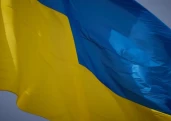
24 February 2026 is the date that marks four years since the Russian Federation launched its war of aggression against Ukraine.








Comentează