






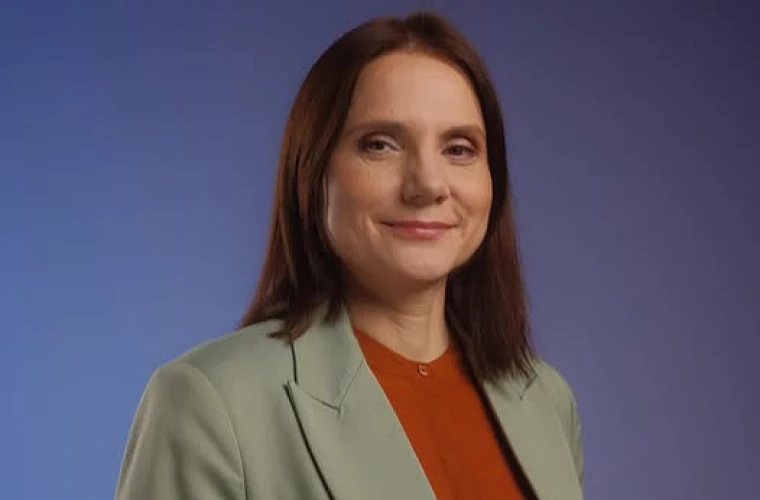
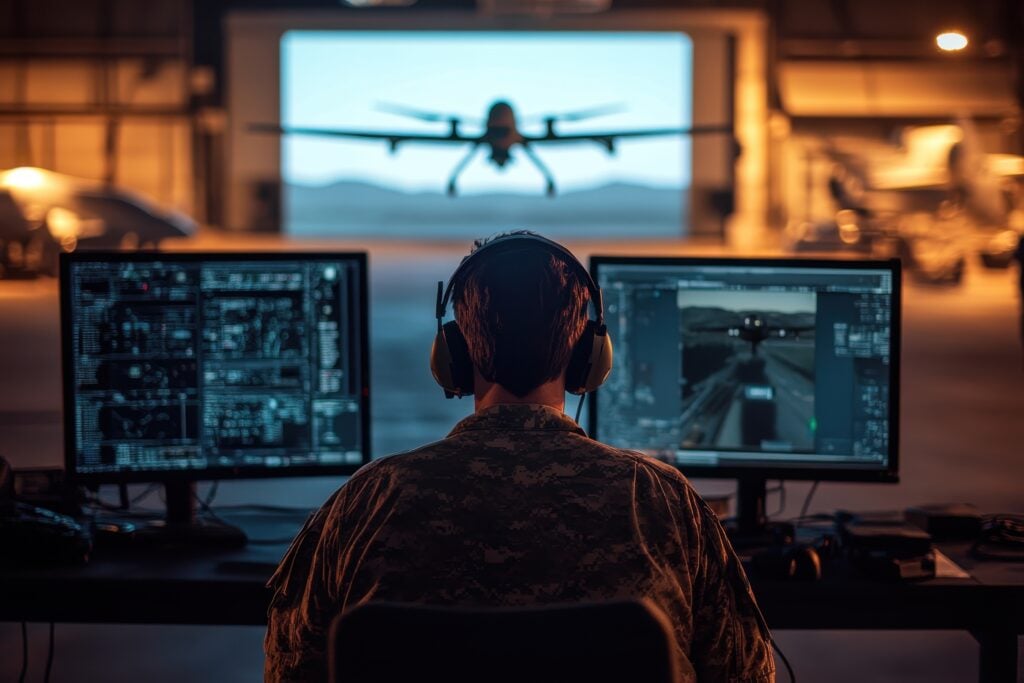
The main objective of the acquisitions through the SAFE program is the development of Romania's defense industry, Mihai Jurca, head of the Prime Minister's Chancellery, said on Monday.
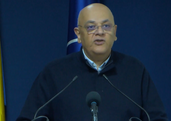
"In November, we submitted the national program, which was previously approved by the CSAT. I told you that it has a total budget of 16.8 billion and the main objective that we have through these acquisitions is to develop Romania's defense industry. This can be done through public companies that the Ministry of Economy coordinates or other public companies that can have a role in the defense industry, but this can be done, in particular, with the private industry in Romania. And here I am thinking of companies that today may not be active in the military field or that do not have activity in the dual field, but which in a situation in which more equipment in the military area or with dual application would be produced in Romania will be able to enter new production and supply chains. (...) We want that through this program, a measure or a percentage of the products to be produced on the national territory, through public or private companies in Romania," stated Mihai Jurca in a press conference at Victoria Palace.
Regarding the involvement of the private sector, he gave as an example a company that produces components for the automotive sector and which, by entering the SAFE program, could make a transition to the defense industry, producing the same type of components, but for military equipment and with military specifications.
The head of the Prime Minister's Chancellery also presented an allocation by area of ??the over 16 billion euros.
"If we talk about the amounts that we have in the application today and that the Commission has approved, we are talking about 4.2 billion, which are allocated for the dual infrastructure. (...) This program also finances the dual infrastructure and we are talking about the two ends of the highway, Pascani - Siret, Pascani - Ungheni, which will be financed from this mechanism and here we have an allocation of 4.2 billion euros. These are extremely important infrastructure components, not only for the development of that area, they are also extremely important components for military mobility. We have 9.6 billion allocated to the Ministry of National Defense - and the Deputy Prime Minister will present to you what these amounts entail - and we have 2.8 billion euros allocated to the Ministry of Defense, the civil defense area, as well as to institutions in the area of ??national safety and security", Jurca detailed.
He mentioned that the national SAFE program is coordinated by the Prime Minister's Chancellery within an institutional group, which also includes the Presidential Administration, the Ministry of National Defense, the Ministry of Interior, the Ministry of Economy and Digitalization and invited institutions: the Romanian Intelligence Service, the Ministry of Transport, the SIE, STS, SPP and the Ministry of Justice.
According to him, the group will centralize operational requirements, meaning that the ministries will send a series of technical specifications related to each type of acquisition or program and these will be matched with cooperation requirements.


"This means the requirements that the Ministry of Economy establishes, so that a higher percentage of these acquisitions are produced in Romania. The two will be put into a single document, and then we will make a joint document and, based on it, draw up the operational requirements and cooperation requirements, which we will submit to the CSAT for approval, and after this approval, each institution, each ministry will begin the procedures to contract the programs it has in its application," Jurca specified.
Jurca also referred to the requirements of the European Commission, which insisted that acquisitions be made jointly by different member states, with a maximum deadline for approval for all acquisitions that are individual or specific to a certain state.
"The deadline is the end of May of this year, by which time projects that are strictly related to the needs identified by one institution or another and that are not found in the needs of other member states that have national projects will have to be contracted so that by 2030 we can make all the expenses and payments for this program," he explained.
Mihai Jurca also detailed the external steps regarding the final approvals for the SAFE program.
"On January 15, the Commission announced the approval of the first wave of financing, of which Romania was also part, and the European Council is still to adopt the decisions for implementation. (...) The next steps externally - the European Council adopts the decisions and implements the Commission's decision, which we hope will happen in February. The signing of the loan agreement, also in February; it may go until March, but the Commission has told us that it intends to accelerate this process as much as possible and to sign the loan agreement in March," said Jurca.














Comentează