



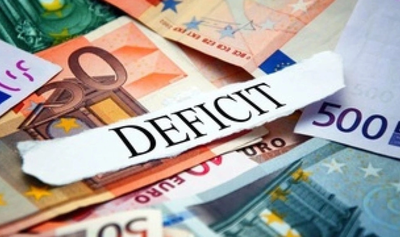


The target of reducing the budget deficit will only be achieved through firm management of public resources and more efficient revenue collection, draw the attention of PwC Romania representatives.
"At the end of a difficult year, with many political turmoil, macroeconomic volatility and tax increases, the most burning question for business leaders is how long the economic correction will last and whether growth will be relaunched. A first indicator of economic realism and recovery plans will be the draft public budget, expected to be published in January. This will give us a picture of the fiscal-budgetary situation and likely measures next year. The recalibration period that began in the summer of 2025, through tax increases and still insufficiently convincing measures in the area of public spending, will continue even if the Government gives assurances that taxes will not be increased. It is quite likely that we will no longer face tax increases of the magnitude of those experienced in 2025, but adjusting the budget deficit by 2 percentage points of GDP, i.e. by about 40 billion lei, will it was a big challenge. "Many of this year's decisions will be reflected in next year's state revenues and expenditures much more significantly, but the deficit reduction target will only be achieved if there is a lot of firmness in the management of public resources both in the area of revenues - with an emphasis on better collection - and in expenditures where so far no visible impact has been observed," it is mentioned in a material signed by Daniel Anghel, Country Managing Partner PwC Romania, agerpres reports.
According to him, political stability, which would mean that decisions will be continued in the same direction, will be extremely important. In fact, IMF representatives were optimistic at the last assessment in December 2025 when they showed that the measures taken are sufficient to reduce the budget deficit and from now on consistency is needed to continue the fiscal consolidation trajectory. Politics is unpredictable and a change of alliances may also mean a deviation from the current fiscal-budgetary plan, the analysis also shows.
"For the business environment, some fiscal predictability, a breather in 2026 would be more than welcome. At the same time, the question of economic recovery remains. After impressive real GDP growth rates of 5.5% in 2021 and 4% in 2022, the economy is facing anemic growth, inflation and large deficits starting in 2023. And the slowdown was not completely accidental or related to global tensions, but induced by extremely generous fiscal policies in relation to the public budget's capacity to support them," the consultants claim.
According to PwC Romania, GDP growth was modest in 2024, at 0.8%, and is estimated, at best, at 1% in 2025, and these increases occur in a context in which public investments (combining EU funds, including PNRR, and allocations from the national budget) reached 6.8% of GDP in 2024 and would reach 8% in 2025, the highest level in the last decade.
The European Commission's forecast of November 17, 2025 estimates that Romania's GDP will grow by 0.7% in 2025 and 1.1% in 2026. The IMF forecasts economic growth of 1% in 2025 and 1.4% in 2026, and the World Bank indicates 1.3% for this year and 1.9% for 2026, the research states.


"The figures do not show dynamism despite the incentives for economic growth. Has Romania's growth model stalled? Most likely not yet, but it is quite obvious that alternatives must be found. With rates of 1% per year we can no longer recover the gaps compared to the European average. The large deficits are the results of a consumption-based growth model that is showing its limits," according to the cited source.
The analysis emphasizes that Romania should move to a model oriented towards investment and productivity.
"Fiscal discipline, public administration reform, institutional and legislative architecture are essential for a sustainable economic model, for which reforms and "a development vision" are necessary. Foreign direct investments in the period January-October 2025 amounted to 7.24 billion euros, up 28.6% compared to the same period last year (5.63 billion euros), public investments will reach 8% of GDP this year, with inflows from European funds, including from the PNRR, being decisive. However, the economy seems to have seized its engines," PWC analysts claim.
In addition, a multitude of changes are affecting and will affect the world and, implicitly, Romania: global trade convulsions, tariff wars, changes in supply chains, relocation of production. Demographics are also another risk factor, due to the aging population and the need to provide pensions and healthcare. The workforce is under pressure from AI and other technologies, which will not necessarily "steal" jobs, but which will dramatically transform them over time and impose new skills and, therefore, a different labor market and another educational model.
"All these changes require a different growth model in which investments and innovation are defining. We recently analyzed the investments of the countries in the region in Romania and those of Romanian companies in the respective states and the conclusion was that more courage and more ambition are needed. Romanian companies must expand, and Romania must not only be an investment destination, but also an important investor. In conclusion, investments, innovation and new technologies should be the priorities of the new economic growth model in order to cope with global changes," the document also states.



















Comentează