



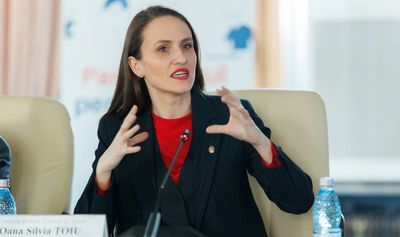


Romania supports the Iranian people's right to freedom and advocates de-escalation of tensions in the region, in coordination with its European partners, including Poland, Romanian Foreign Minister Oana Toiu said during a visit to Poland. She underscored that the European Union remains a political project for peace, and that the transatlantic partnership with the United States, although affected by a reduced US prioritisation of Europe, remains essential for the security of the eastern flank.
The head of Romanian diplomacy made these statements in an interview with TVP World, ahead of her meeting with her Polish counterpart, Radoslaw Sikorski. Iran currently represents the main concern for most diplomats, given the escalations in the region and concerns regarding the safety of European citizens there, she anticipated one of the discussion topics.
'We believe that we need to support the future the Re-Iranian people are choosing, and I have seen the joy with which they have received the news. And, in that sense, it is very clear now that the only transition to a possible democracy, the transition to Iran as a state that has economic development, that goes back into a rule-based order, was not possible under the dictatorship they had,' Toiu replied when asked about Romania's position, given that no European country has so far joined the US military action and some governments have explicitly stated that it does not fully comply with international law.
She acknowledged that the decisions of the United States and Israel are not perfect and do not always comply with international rules, but argued for the use of diplomatic channels to support a democratic and secure path forward, without backing the former regime in Iran.
In this context, Toiu drew a parallel with Romania's experience in 1989. 'I'm not saying they're the same thing. But what I'm saying is I know for a fact, from my experience in Romania, for the experience of Romania as a country in transition, that getting out of a dictatorship allows freedom to flourish. (...) I think Khamenei's death is a turning point, but we're not at the end of the process. And we are, of course, very worried, especially on the effect it has on the region. I have spoken with my counterparts in the region, and I have shared this as well with ministers of foreign affairs in the European Union, that I think we need to have a common voice towards de-escalation. Maybe even a temporary ceasefire' between Iran, Israel and the states involved, to allow the safe evacuation of citizens, the Minister explained.

Asked whether, in her view, the US administration would support such a ceasefire, Oana Toiu emphasised the need for such an initiative. 'This is a discussion that must take place. I would love to live in a world where a UN resolution would take a dictator out of their place and manage the transition to democracies, but we are not there yet. (...) I think it is true to say that Iran was and still continues to be a threat,' she said.
The Romanian foreign minister underscored that Romania is not militarily involved in operations in the region and has no intention to be. She noted that Romania and Poland are already aligned on numerous issues, including relations with the Gulf states and assessments of recent developments, emphasising that the two countries share similar priorities and will discuss coordinating measures to support de-escalation and protect citizens.
Asked why Europe appears reluctant to become militarily involved, Toiu observed that the European Union is a political project created for peace and that no one wishes to see another world war.
The transatlantic partnership, another topic raised by TVP World, remains essential for Romania, even if there are differences or a reassessment of resources on the part of the United States, Toiu said.
'The military presence of the United States is very important in our countries. In our country the economic and people-to-people ties with the United States are very, very important. We have invested a lot in this relationship and we will continue to invest a lot in it and make it a priority. In the same time, of course, we need to look at the fact that the United States has taken a decision to decrease the priority they have on Europe as such. And that, of course, creates a level of concern, especially in the countries on the eastern flank. But the conversations I've had in Washington reaffirm the strategic partnership and the clarity in many leadership circles, including in the Republican Party, that the security of Europe, of the eastern flank, of the Black Sea is something they are invested in,' the Romanian foreign minister maintained.
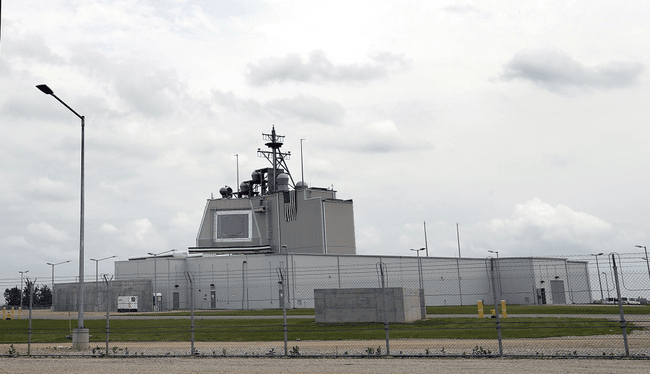
Asked to provide examples demonstrating that the transatlantic partnership remains solid, Oana Toiu acknowledged that it would be 'naive' to say that nothing has changed, given that the US has announced a reassessment of its resource allocation. Nevertheless, she stressed that Romania continues to invest in strengthening its air defence capabilities, in military cooperation with the United States, and in monitoring its airspace, including to counter hybrid interference.
'For Romania it is very clear that the transatlantic partnership is essential, and it is also very clear that there is a strong partnership between the European Union and the United States even if we have now strong points of disagreement, like on the online platforms for example, but if we look at this relationship from a bilateral perspective or from a European-US perspective, the financial ties, the security partnerships, the people-to-people ties, I think they are strong enough anchors to weather any storm,' Oana Toiu expressed her confidence.
Regarding Monday's announcement by French President Emmanuel Macron on expanding the nuclear arsenal and cooperating with several states, among which Romania does not feature, the Romanian foreign minister explained that this is a matter of national security to be discussed within the Supreme Council of National Defence, chaired by the President, and declined to offer a personal opinion.
'The imperative of every state is to ensure the security of its citizens, and I have full confidence in our President and in the inter-institutional decisions we will take,' Oana Toiu stated. A









Comentează