



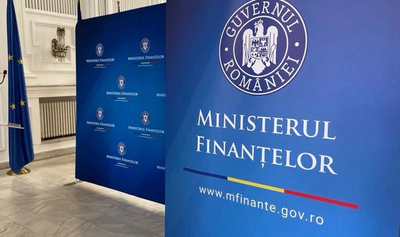


The Ministry of Finance is implementing a blockchain-based system for the administration, storage and verification of fiscal receipts issued by electronic cash registers.
'The project Development of Services for Fiscal Receipts through Blockchain Technology (BF-CHAIN)' responds to a real need for transparency, security and simplification in the relationship between citizens, businesses and the tax administration. The use of blockchain technology allows the creation of a secure and immutable digital register in which fiscal receipts are automatically recorded, without the possibility of subsequent alteration,' the Ministry said in a press release, agerpres reports.
According to the institution, this will ensure the accuracy of fiscal data and significantly reduce the risk of errors, loss or fraud.
The project aims to store data in a cryptographically secured digital register that cannot be modified without leaving evidence of any changes. It is expected to bring key benefits such as increased fiscal transparency, reduced risk of fraud or human error, and a clear, verifiable record of transactions.
'In practice, this means greater trust for citizens and companies, more efficient administrative processes and the prospect of reducing bureaucracy and repetitive inspections, as information can be verified quickly and securely within the system, without requiring modifications to the cash registers currently used in Romania,' the Ministry added.
By the end of the implementation period, in December 2027, at least 5,000 cash registers will be integrated into the system, with the number set to increase as nationwide adoption expands. The project will not require the replacement of existing cash registers, as the system will operate after receipts are transmitted by them.
According to the Ministry of Finance, BF-CHAIN will give citizens direct and transparent control over the receipts they receive, as these can be quickly verified via a mobile application. Digital receipts will not deteriorate like those printed on thermal paper, and their history will be easily accessible, simplifying warranty claims, returns and personal budget management.


'For companies, blockchain technology enhances the security of fiscal data by eliminating the possibility of retroactive modification and reducing the risk of human error and suspicions of record manipulation. In the long term, this will also mean fewer on-site tax inspections, as authorities will be able to verify data directly in a cryptographically validated digital register. This allows firms to focus more on economic activity and less on bureaucracy, encouraging a climate of voluntary compliance,' the statement further reads.
The BF-CHAIN architecture also allows the extension of the technology to other types of fiscal data, including electronic invoices. Integrating blockchain into the e-Factura system could support VAT collection and align Romania with international trends in Real-Time Reporting (RTR), the Ministry underlined.
A distributed ledger for e-Factura would enable automatic verification of invoices between partners, limit fraud through the uniqueness and traceability of each transaction and, in the future, facilitate the use of smart contracts to automate tax deductions and payments, thereby reducing cash-flow bottlenecks for compliant companies.
The total value of the project amounts to 46.87 million RON, of which 32.2 million RON represents non-repayable European funding. The project is co-financed by the European Union through the European Regional Development Fund (ERDF) and will run from 22 December 2025 to 22 December 2027. Partner co-financing amounts to 10.78 million RON, while the non-eligible expenditure stands at 3.8 million RON.























Comentează